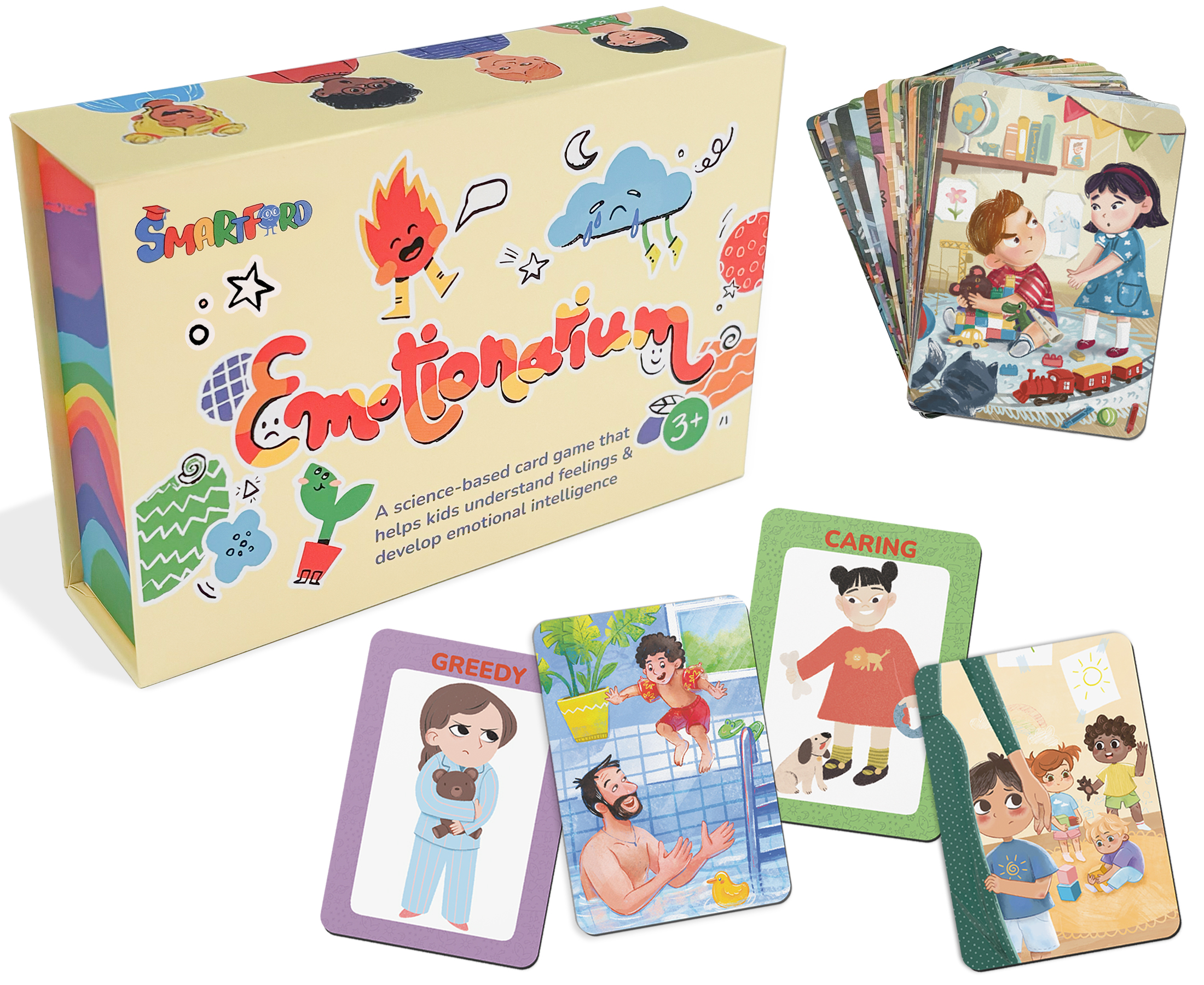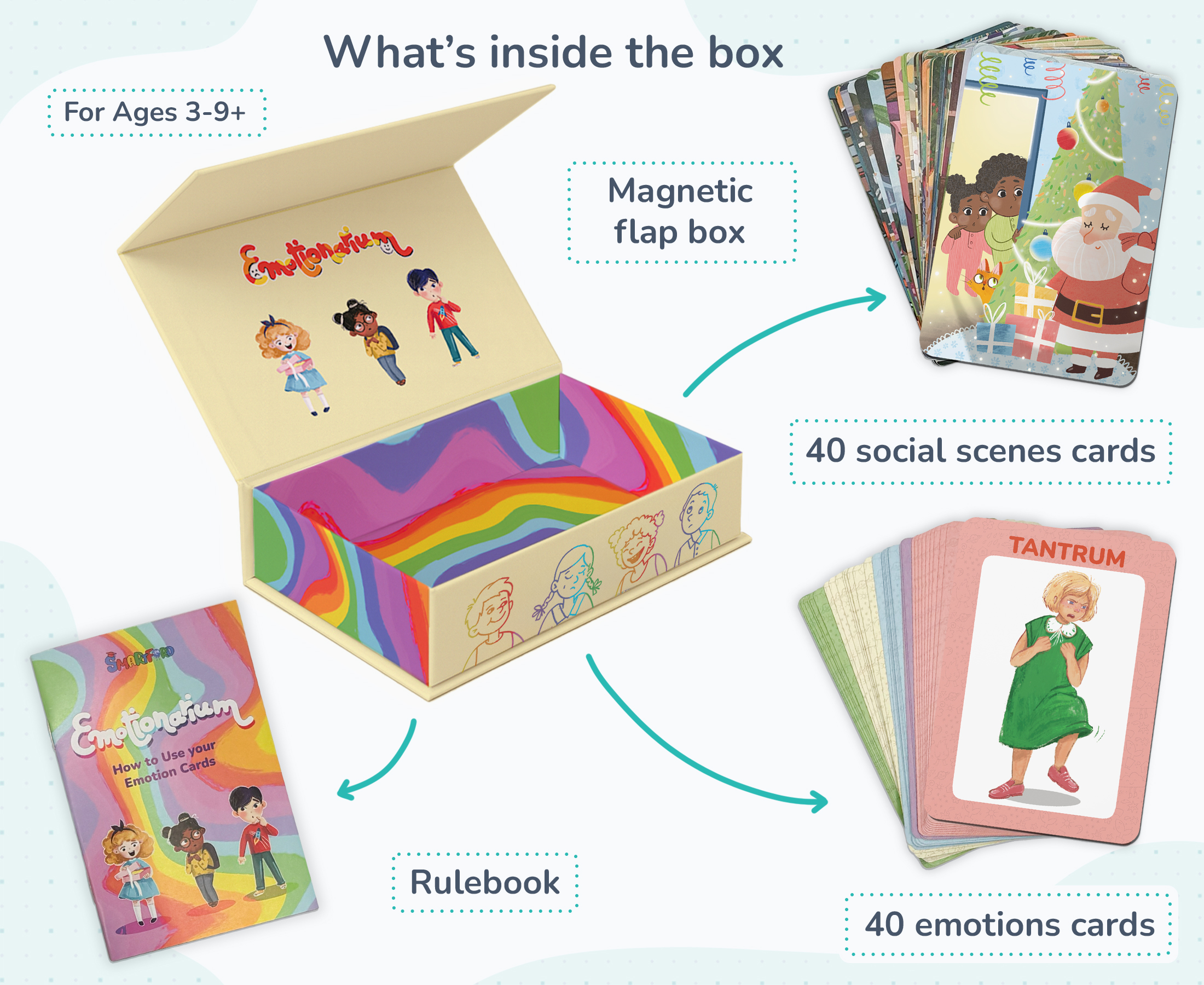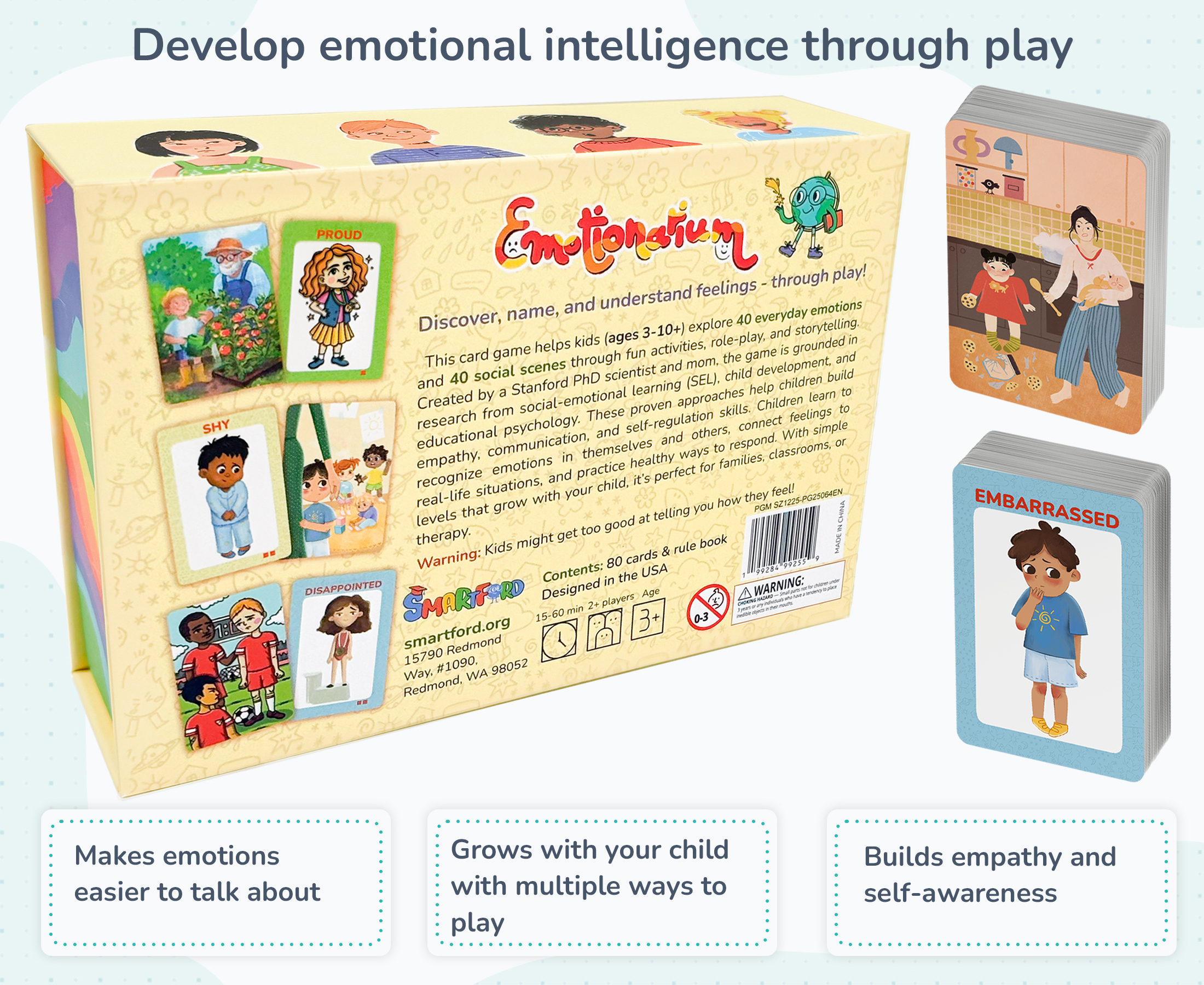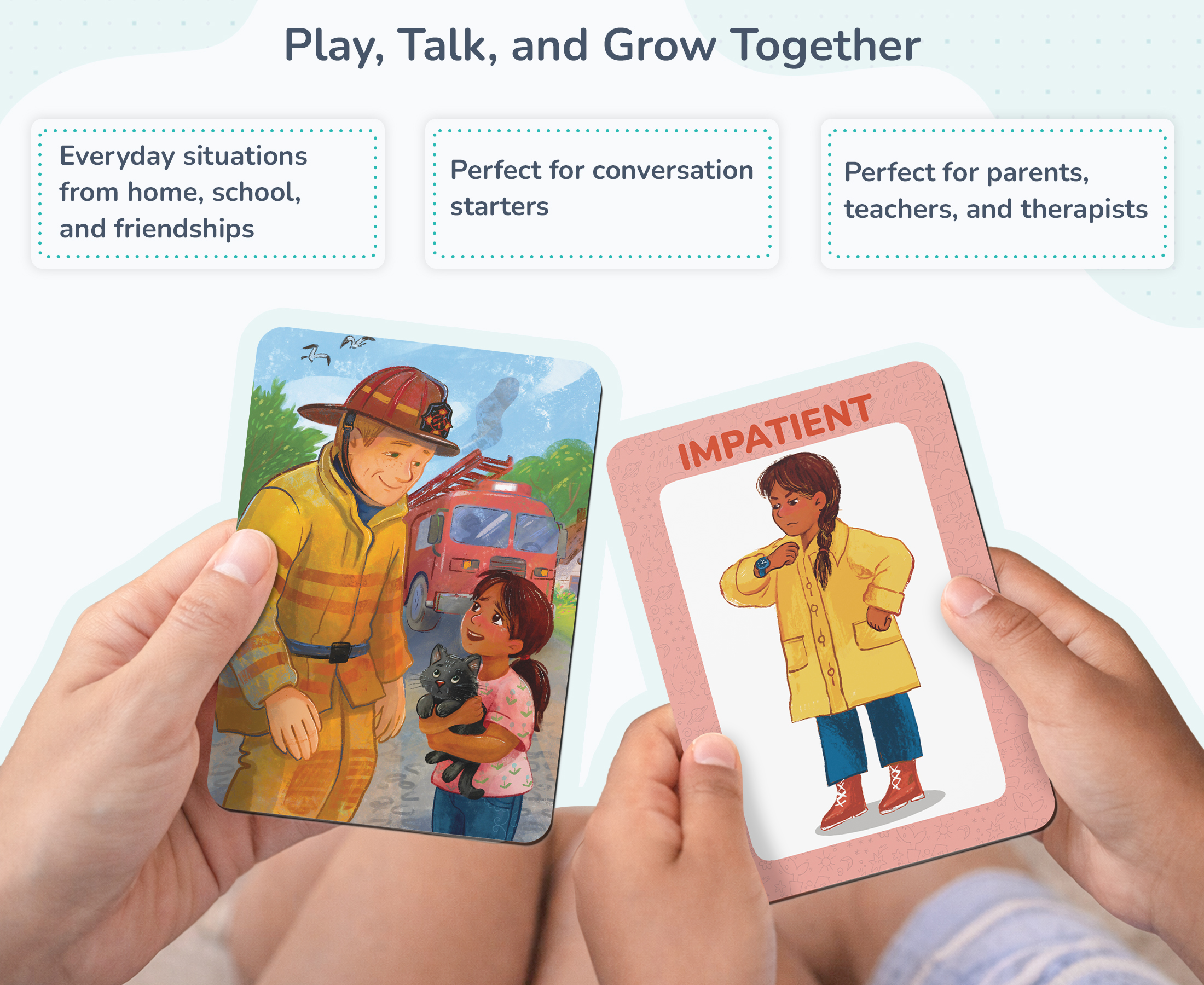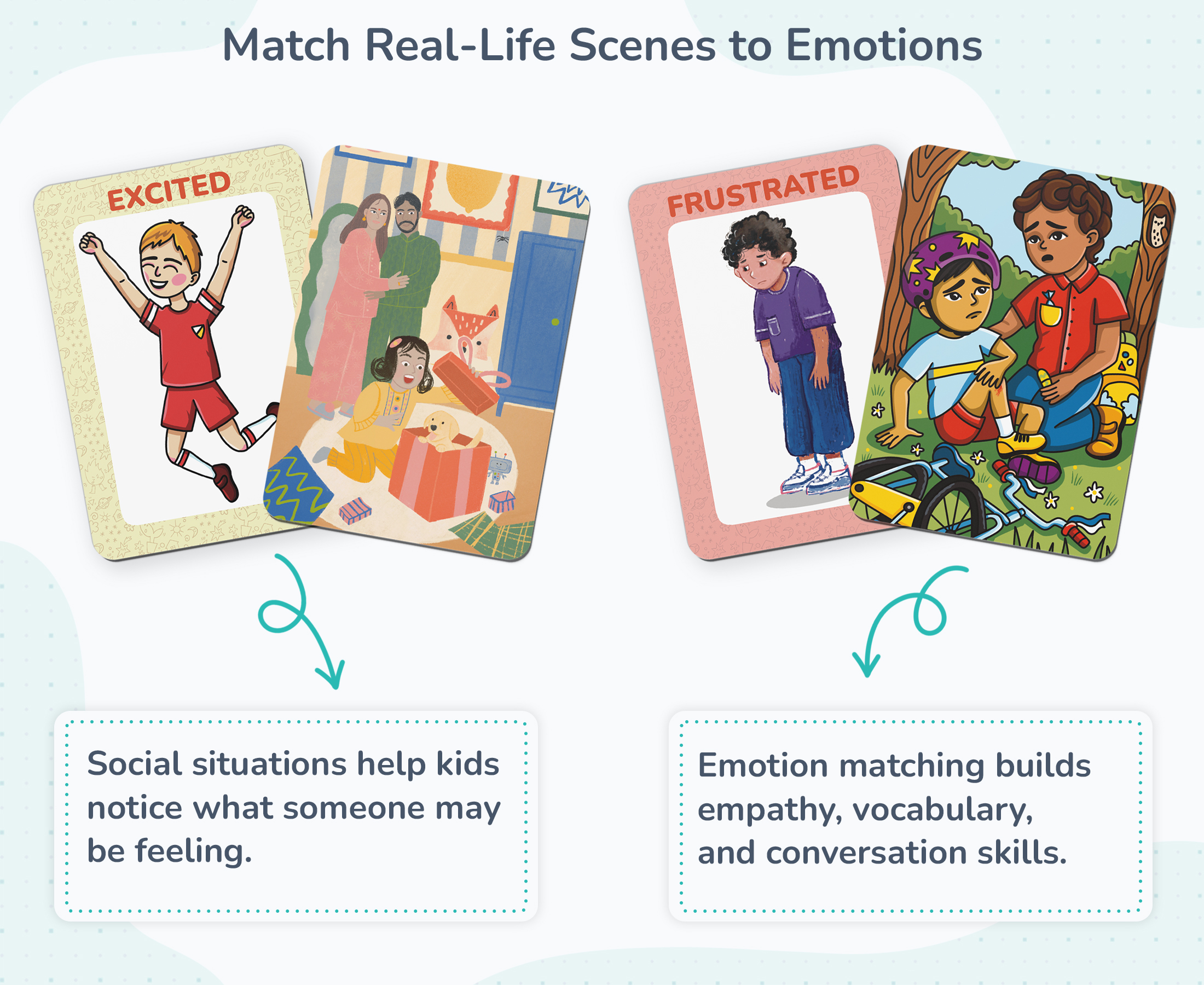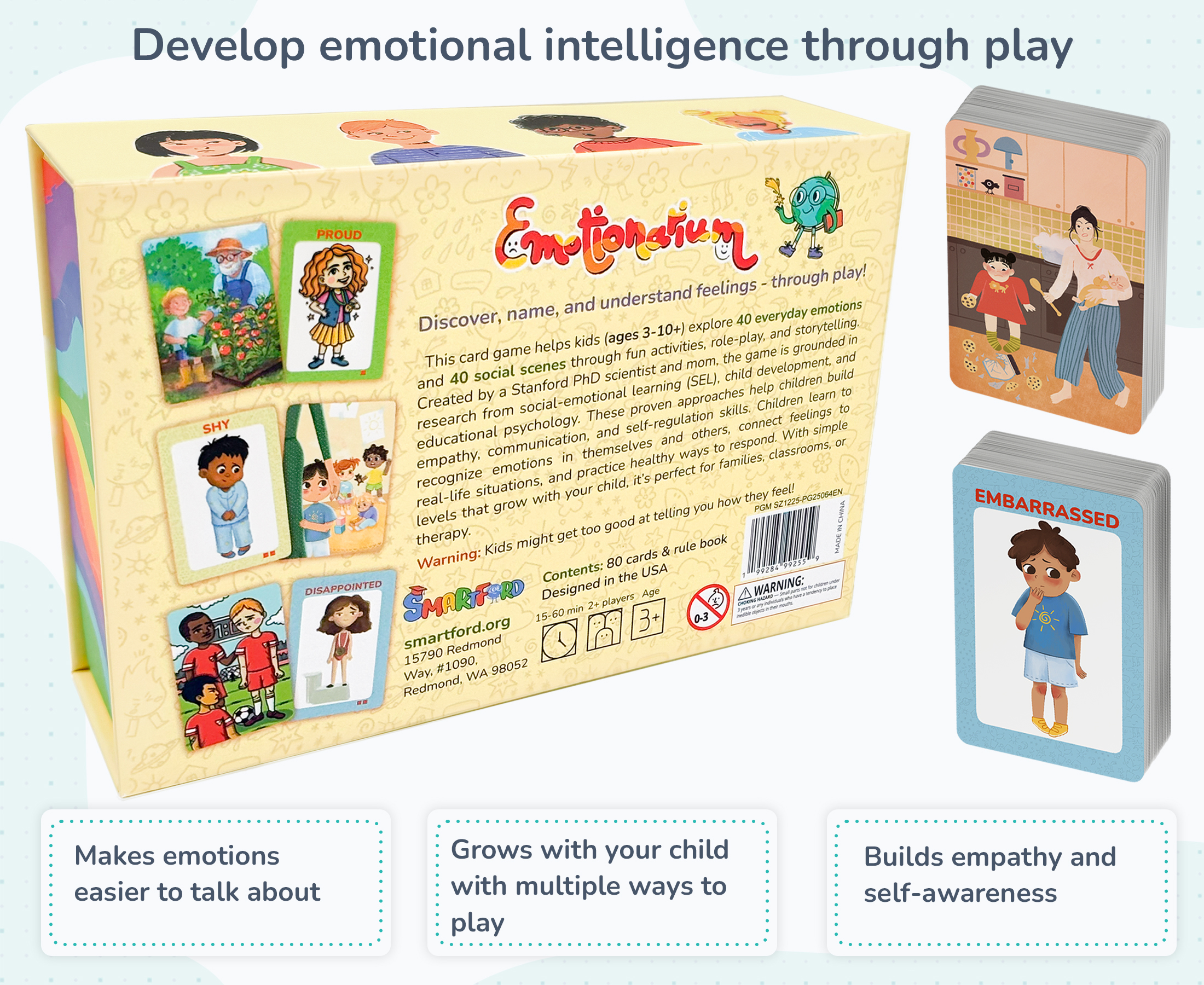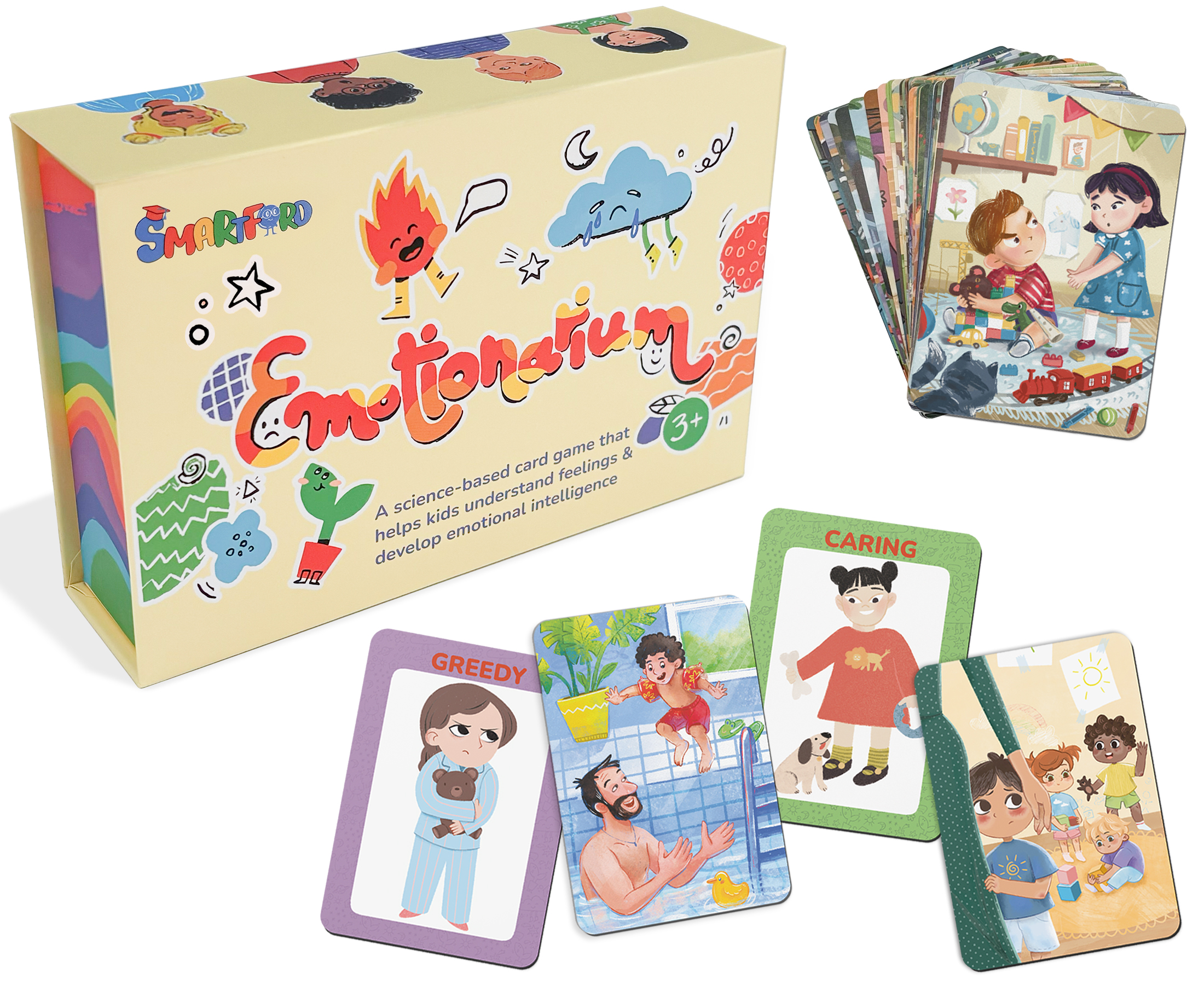
Discover, name, and understand feelings — through play! A science-based card game that helps kids explore 40 everyday emotions and 40 social scenes through fun activities, role-play, and storytelling.
🚀 Shipping early May 2026
Real families, real feelings, real conversations.
See how families play and the conversations that come out of a single round.
Your video goes here
Simple enough for a 3-year-old. Rich enough to keep a 10-year-old engaged.
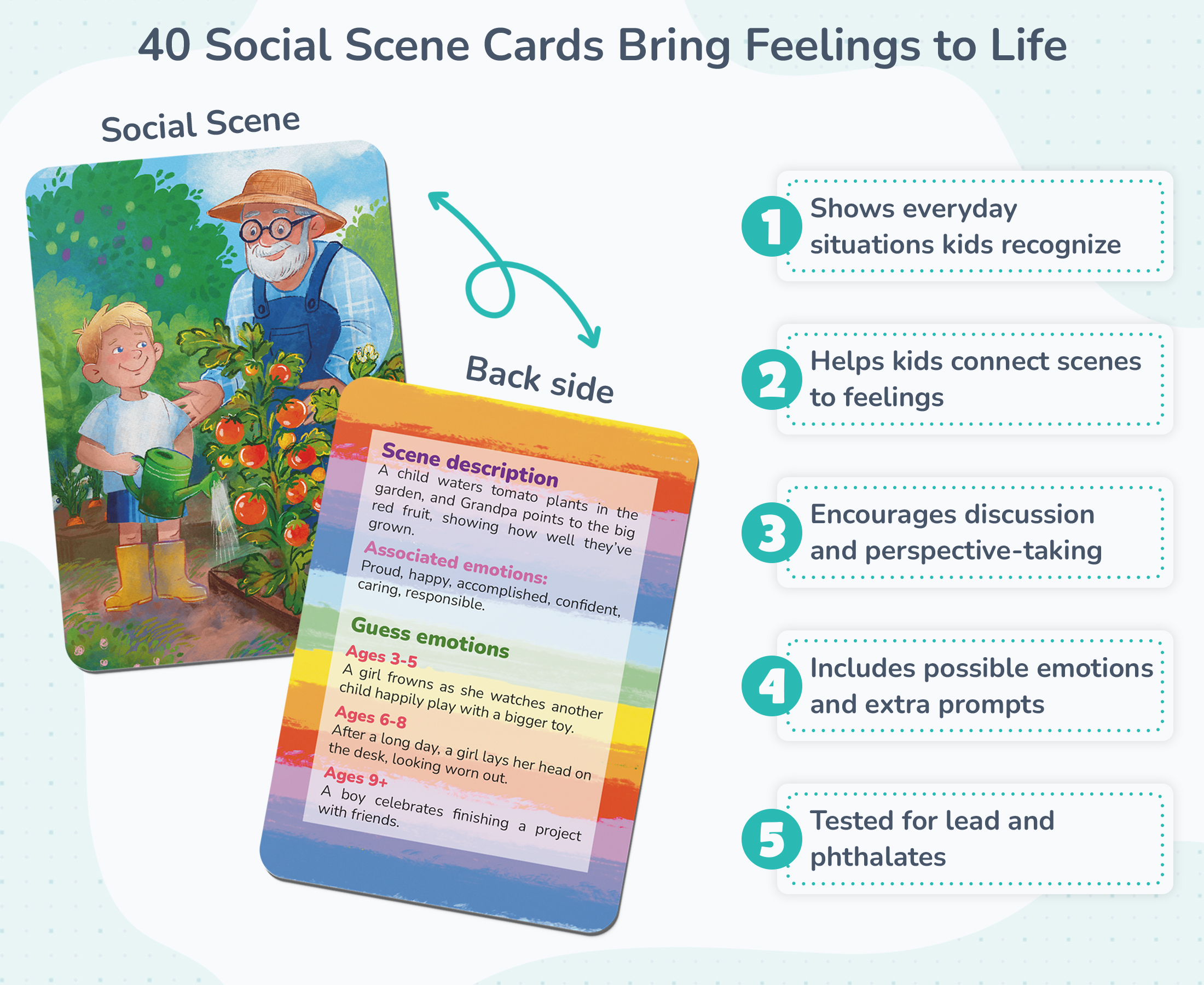
Draw an Emotion Card or Social Scene Card. Look at the illustration together and describe what you see — the face, the body, the situation. Each card is designed to spark immediate recognition.
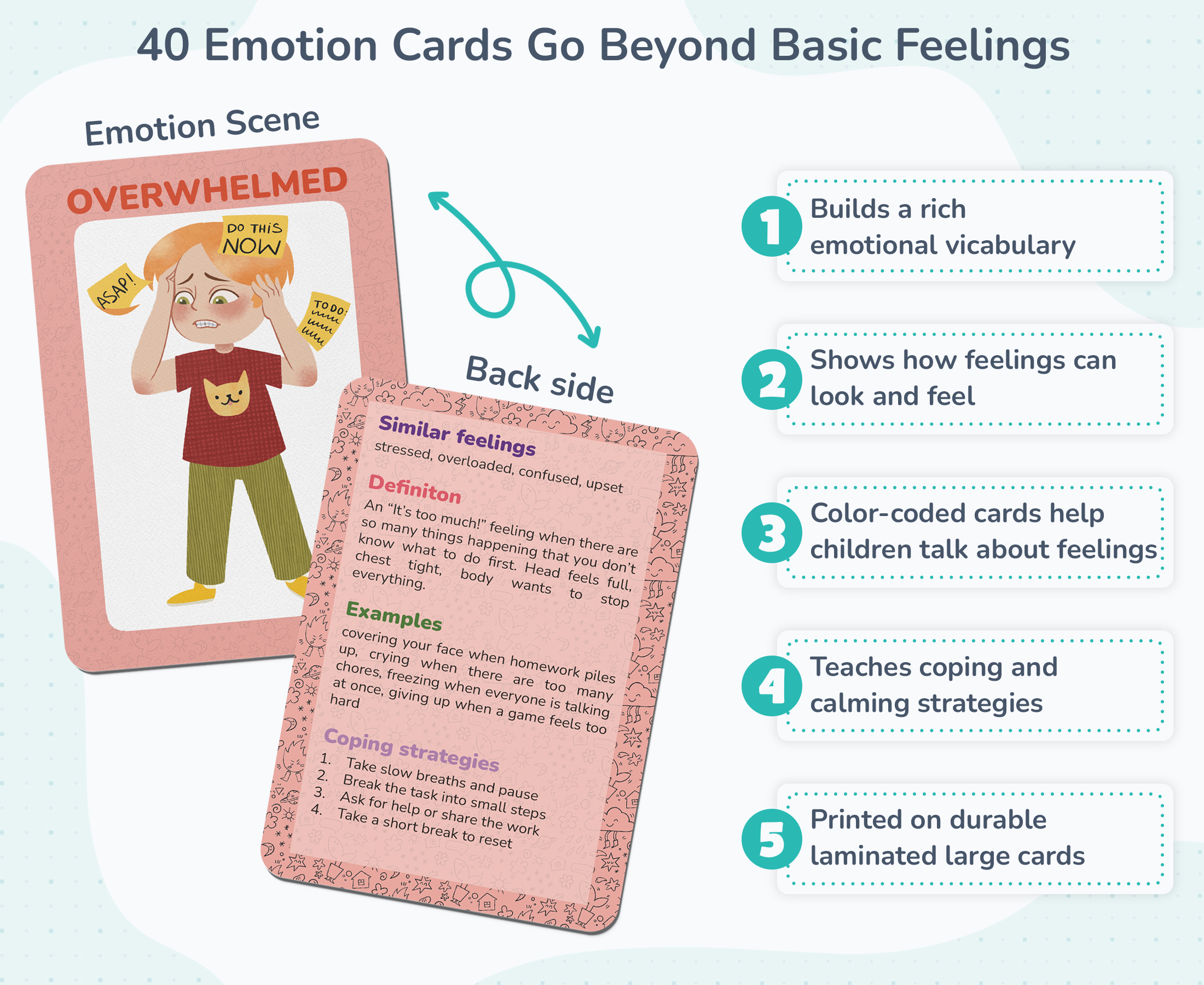
Give the feeling a word. Emotion cards include a child-friendly definition and an "emotion family" (e.g., annoyed → irritated → angry), helping kids build a precise emotional vocabulary.
Talk about healthy ways to handle the feeling — coping strategies are printed right on the card. Repeated practice of this loop wires the brain to use these skills automatically in real life.
Every design decision in Emotionarium is grounded in child development research.
When children can name what they feel — "I'm frustrated" instead of "I'm bad" — it's easier for them to calm down and handle tough moments. Naming a feeling reduces its intensity in the brain.
Understanding other people's feelings builds empathy — the ability to see the world from someone else's point of view. This leads to kinder play, stronger friendships, and fewer arguments.
Kids who can read emotions solve social problems better — they know when to ask for help, how to take turns, and how to make things right. Early emotional training builds resilience.
Schools that teach emotions and social skills see better focus and even higher test scores. When kids feel understood and can regulate themselves, they're truly ready to learn.
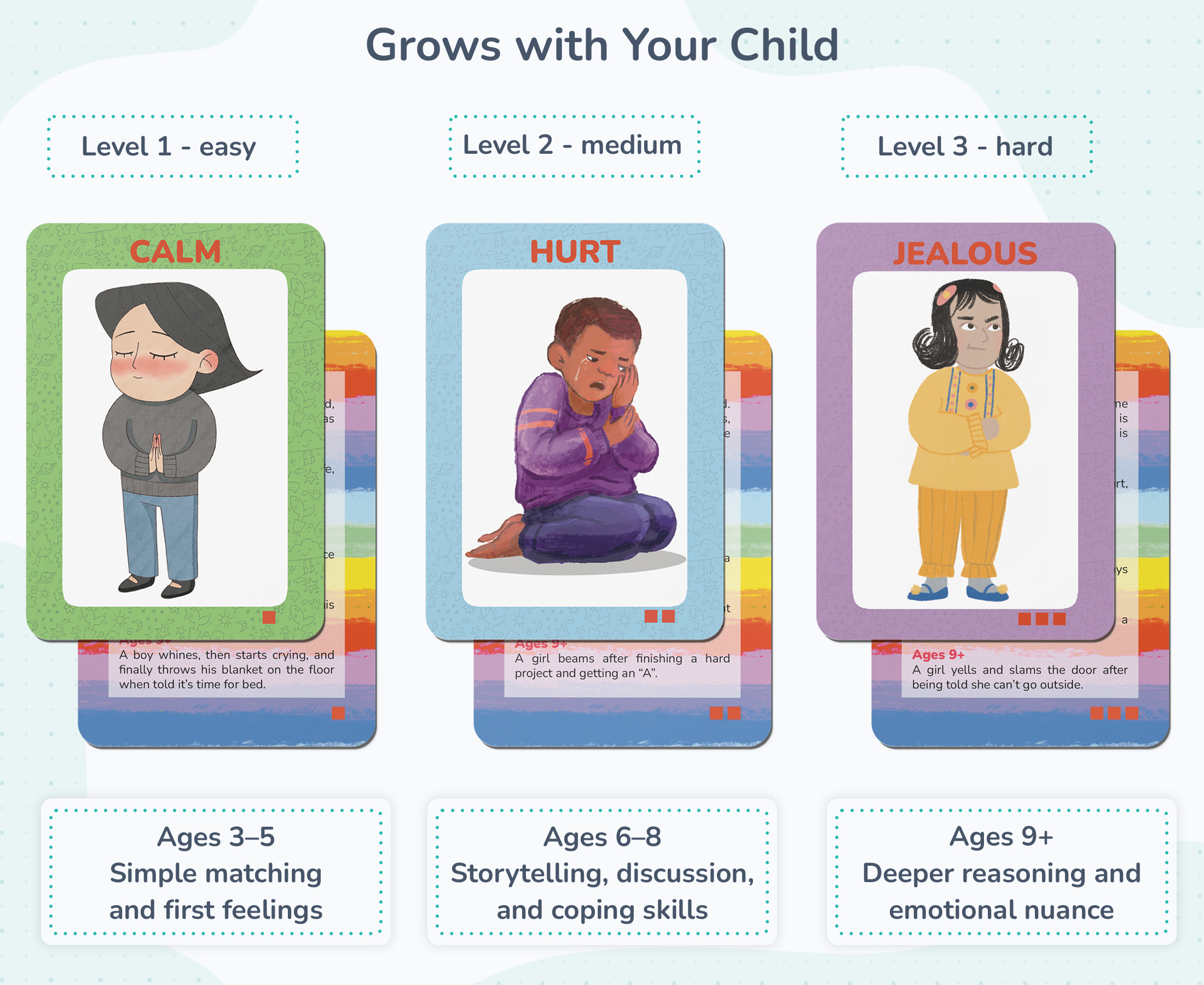
Three levels of difficulty — always start at Level 1 and move up as your child gets comfortable.
Simple recognition and description. Young children learn to see, describe, and name feelings through gentle one-on-one play. Variations include matching scenes to emotions, picking a card that shows how they felt today, and connecting feelings to real-life moments — even before they can read.
Matching emotions with actions, building empathy. Children connect feelings to their causes and explore coping strategies. Play includes acting out social scenes, Dixit-style storytelling, and discussing why people interpret situations differently — in small groups or with the family.
Nuanced emotions, debate, and storytelling. Older players explore subtle differences between feelings, how emotions can change over time, and why the same scene might feel different to different people. One scene can trigger many emotions — and that's the whole point.
Every emotion in the game is color-coded using the Zones of Regulation framework — helping children quickly recognize and talk about how they feel.
Happy, focused, content, proud
Excited, silly, nervous, frustrated
Sad, tired, bored, lonely
Angry, terrified, out of control
Jealous, guilty, embarrassed, greedy
Pre-order Emotionarium today and be among the first families to play when we ship in May.
⚠️ Warning: Kids might get too good at telling you how they feel!